Sep 16, 2026Buying Guides
What Is LED Neon Flex? Types, Benefits, Applications and Selection Guide
LED neon flex is a flexible lighting solution that creates smooth, continuous lines of light. Choosing the right product requires checking installation conditions, dimensions, lighting performance.

What Is LED Neon Flex? Types, Benefits, Applications and Selection Guide
Lighting can do more than illuminate a space. It can define architectural lines, highlight products and turn a simple curve into a distinctive design feature.
LED neon flex creates continuous lines of light for retail interiors, hospitality spaces, signage and outdoor landscapes. Choosing the right product starts with understanding its construction, bending direction and installation requirements.

What Is LED Neon Flex?
LED neon flex is a flexible linear lighting product that combines an LED light source with a light-diffusing enclosure. The enclosure blends the light from individual LEDs into a smooth, continuous illuminated surface.
Unlike traditional glass neon, LED neon flex uses LEDs rather than gas-filled glass tubes. Depending on the model, its construction may include an internal LED strip, a silicone or other polymer enclosure, end caps and power cables.
The diffuser and housing are part of the finished lighting system. Their design influences the appearance of the light, the direction in which the product can bend and how it should be installed.
What Are the Main Types of LED Neon Flex?
LED neon flex can be classified in several ways. For project selection, bending direction, cross-section size and lighting effect are especially useful.
1. Bending Direction
Common options include side-bending and top-bending neon flex. Some specialized products support bending in more than one direction.
The correct choice depends on how the light-emitting surface must face while the strip follows the desired curve. A product that works for a wall-mounted outline may not bend correctly for a different installation orientation.
Always check the manufacturer’s bending diagram and minimum bend radius. Flexible does not mean that a product can be twisted, folded or bent sharply in any direction.
2. Cross-Section Size
Cross-section dimensions help determine whether a product fits the installation space and creates the intended visual line.
Examples include:
Cross-section example | What to check before selection |
|---|---|
16 × 16 mm | Available mounting space and the required line width |
20 × 20 mm | Profile compatibility and visible lighting proportions |
30 × 20 mm | Orientation of the rectangular profile and emitting surface |
40 × 25 mm | Mounting clearance, support and integration with architectural details |
Dimensions should always be identified as width × height, with the emitting face shown in the product drawing. A larger housing does not automatically mean higher brightness; compare the specifications of each model.

3. Lighting Effect
Depending on the product range, options may include:
- Single-color white: a fixed color temperature for architectural or decorative lighting.
- Tunable white: adjustable color temperature for different moods or operating conditions.
- RGB or RGBW: color-changing lighting for decorative applications.
- Addressable effects: individually controlled sections for programmed patterns, where supported.
The power supply and controller must be compatible with the selected product. Color-changing capability alone does not mean that individual sections can be controlled separately.
4. Housing and Environmental Design
Housing color, diffuser shape and emitting-surface width affect how the product looks both when illuminated and when switched off.
Indoor and outdoor models may also differ in materials, sealing and environmental performance. Select the complete product specification for the installation conditions, rather than relying on appearance alone.
What Are the Advantages Over Conventional LED Strip Lights?
The main benefits of neon flex are its integrated appearance, continuous light output and suitability for curved lighting designs.
A Smooth, Continuous Light Line
The diffusing enclosure helps reduce the visibility of individual LED points. This is particularly valuable when the lighting is directly visible rather than concealed behind a ceiling or cabinet.
However, conventional LED strips are not all the same. COB strips and strips installed behind suitable diffusers can also produce smooth lighting effects.

A Finished Appearance for Visible Installations
Neon flex combines the light source and enclosure in one product. This can make it well suited to exposed outlines, decorative wall features and other installations where the lighting itself is part of the design.
Mounting channels or clips may still be needed to support the product and maintain a consistent shape.
More Options for Curved Designs
With the correct bending direction and sufficient bend radius, neon flex can follow sweeping curves, rounded features and custom outlines.
This makes it useful where a flexible illuminated line is central to the design.
Environmental Protection Options
Appropriately specified products can support outdoor installations. Suitability depends on the complete system, including the enclosure, cables, connectors and sealed ends.
Neon flex is not automatically brighter, more efficient or longer-lasting than conventional LED tape. Diffusion, construction, operating conditions and installation all affect performance. Compare actual lumen output, power consumption and operating limits.
Where Can LED Neon Flex Be Used?
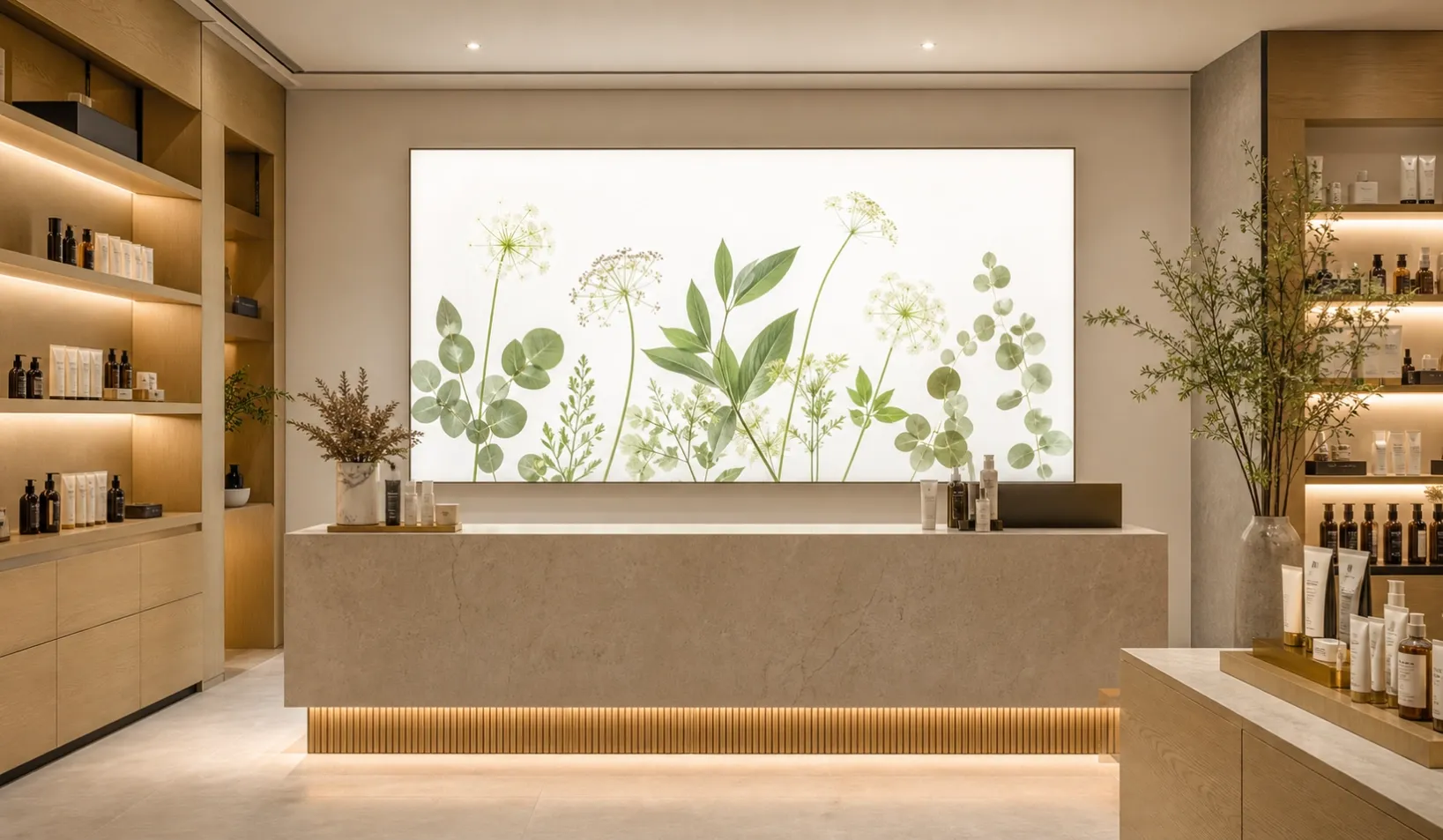
Retail Stores and Luxury Boutiques
Neon flex can frame mirrors, outline displays or create flowing wall features. In fashion and luxury retail, a carefully positioned line of light can complement materials and merchandise without overwhelming them.
For displays where accurate product color matters, consider the color temperature and color-rendering performance of the overall lighting scheme.

Application concept: a curved light line integrated into a luxury boutique display wall.
Hotels, Restaurants and Bars
Typical locations include reception desks, corridors, feature walls and bar fronts. Neon flex can emphasize architectural details and contribute to the atmosphere of a space.
Where dimming is required, check compatibility between the lighting product, power supply and control system.
Residential Interiors
Neon flex can be integrated into wall features, cabinetry, ceiling details and stair-side accents. Planning the mounting position early helps keep the installation tidy and provides access for future maintenance.
Outdoor Courtyards and Landscapes
Suitable outdoor models can follow garden walls, planter edges and architectural boundaries. Curved installations are particularly effective for defining the shape of a landscaped space.
Check exposure to sunlight, temperature extremes and water, as well as the manufacturer’s installation requirements. An IP rating alone does not establish suitability for every outdoor environment or continuous submersion.

Application concept: continuous lighting along a curved landscape wall.
Signage and Decorative Installations
Selected neon flex products can be used for lettering, symbols and artistic outlines. For detailed shapes, check the minimum bend radius, cutting interval and mounting method before finalizing the design.
How to Choose the Right LED Neon Flex
Before ordering, confirm these six points:
- Installation environment: indoor or outdoor, including relevant exposure conditions.
- Shape and orientation: straight runs or curves, emitting-face direction and permitted bending direction.
- Dimensions: profile width, height, mounting clearance and channel compatibility.
- Lighting requirements: color temperature, color rendering, output and control effects.
- Electrical requirements: voltage, power per meter, maximum feed length and power-supply compatibility.
- Assembly details: cutting intervals, cable exit direction, connections, end caps and mounting accessories.
For larger projects, evaluate a sample in the intended mounting position. This helps confirm the light appearance, fit and control behavior before a full order.
Frequently Asked Questions
Can LED neon flex be cut?
Many models can be cut at designated intervals. Follow the selected product’s instructions. Cutting may require specific reconnection and sealing procedures, particularly for outdoor installations.
Can it bend in any direction?
Usually, a model has a defined bending direction and minimum radius. Do not twist or sharply fold it unless the manufacturer explicitly permits that handling.
How long can one continuous run be?
Maximum run and feed lengths depend on the product’s voltage, power and electrical design. Longer installations may require additional power feeds. Physical length and allowable single-feed length are not necessarily the same.
Can LED neon flex be dimmed?
Many products support dimming with compatible equipment. Confirm the control method and the complete system configuration before purchase.
Is every neon flex product suitable for outdoor use?
No. Use a model specified for the actual environment and follow its requirements for mounting, connections and end sealing.
Planning a Neon Flex Project?
A clear project brief makes product selection more efficient. When requesting a quotation, include:
- Installation location and environmental conditions
- Required profile size and light color
- Total quantity and individual section lengths
- Curves, mounting details or project drawings
- Dimming or control requirements
- Expected order quantity and delivery schedule
These details help your supplier recommend a suitable configuration and identify any installation constraints before production.